
AI Skills Yatra 2026: Master AI & AI Automation to Grow Faster
AI Skills Yatra 2026: Master AI & AI Automation to Grow Faster
AI Skills Yatra 2026: Master AI & AI Automation to Grow Faster
AI Skills Yatra – Discover, Learn & Grow with AI in 2026
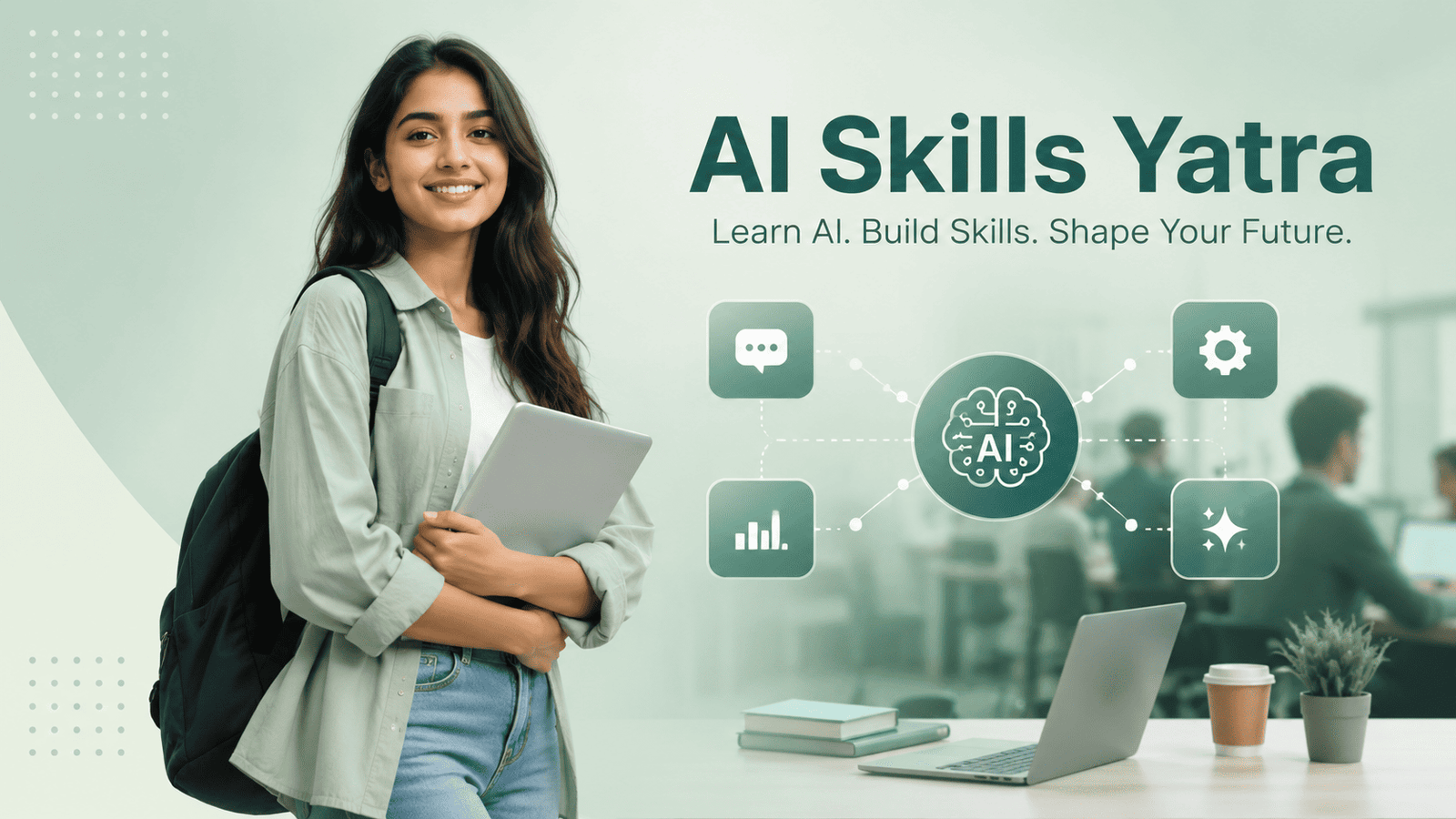
Artificial intelligence is no longer just a futuristic concept; it is the backbone of today’s digital workplace. AI Skills Yatra is a transformative, nationwide initiative designed to enable learners, professionals, and creators to gain practical AI skills and build the confidence needed to thrive in modern industries.
Whether you are a student exploring new career paths or a working professional aiming to stay competitive, understanding how intelligent systems work is essential.
What is AI Skills Yatra?
The AI Skills Yatra mission focuses on closing the skill gap by bringing actionable, real-world artificial intelligence training to everyone. Rather than focusing purely on abstract theory, this journey emphasizes practical implementation—teaching you how to leverage AI tools to simplify tasks, analyze information, and create scalable digital solutions.
To get started with the basics, explore What Is AI Automation? A Complete Guide for Beginners to understand the core foundations and real-world applications driving this change.
Why AI and Automation Skills Matter Today
As industries evolve, manual and repetitive operations are rapidly shifting toward automated workflows. Learning how to integrate artificial intelligence into standard processes allows you to work smarter, eliminate workflow bottlenecks, and achieve higher efficiency.
Understanding intelligent workflows requires a solid grasp of modern technical capabilities. To learn how machine learning combines with automated systems, read What Are Skills in AI and AI Automation? (2026 Core Skills Guide) to see which capabilities companies prioritize most.
Key Capabilities You Will Develop
Participating in the AI learning movement helps you build a well-rounded skill set, including:
Generative AI & Prompt Engineering: Mastering tools that generate content, code, and design assets efficiently.
Workflow Automation: Building no-code and low-code triggers that connect everyday applications seamlessly.
Data Analysis & Predictive Logic: Utilizing smart algorithms to extract clear insights from raw metrics.
AI System Integration: Connecting API-driven models directly into production environments.
For a detailed roadmap of the most valuable capabilities to focus on this year, check out our guide on Top AI Skills in 2026: What You Actually Need to Learn to Stay Ahead.
Lucrative Career Opportunities in AI
Upskilling through the AI Skills Yatra framework opens up multiple high-paying career avenues across software development, marketing, data management, and business operations. Roles such as AI Workflow Specialist, Automation Consultant, and Prompt Engineer continue to see rising demand and competitive compensation packages.
To review compensation trends, job profiles, and industry growth numbers, visit What is AI in Automation? Types, Salary & Career Guide 2026.
Final Thoughts: Start Your AI Journey
The digital economy rewards those who proactively upgrade their skill sets. By participating in initiatives like the AI Skills Yatra, you gain practical hands-on experience that sets you apart in the modern job market. Start building your skills today to lead the digital transformation journey.
The main objective of AI Skills Yatra is to provide accessible, practical artificial intelligence training to learners, students, and professionals across the country. It empowers individuals to develop hands-on digital capabilities, master intelligent automation tools, and adapt to modern workforce demands.
AI Skills Yatra is open to anyone interested in modern technology, including beginners, college students, software developers, marketing specialists, and business owners. No advanced coding background is required to begin learning foundational workflows.
Traditional automation follows rigid, predefined rules (like basic script triggers). AI automation incorporates machine learning, natural language processing, and pattern recognition to adapt, make decisions, and analyze complex unstructured data. To understand the differences, review What Is AI Automation? A Complete Guide for Beginners.
Beginners should focus on prompt engineering, generative AI platforms, basic automation triggers (such as Zapier or Make), and fundamental data literacy. For a detailed breakdown of core competencies, check our comprehensive What Are Skills in AI and AI Automation? (2026 Core Skills Guide).
5
Key high-paying roles include AI Automation Engineer, Machine Learning Operations (MLOps) Specialist, AI Solutions Architect, and Enterprise Workflow Consultant. Detailed compensation brackets can be found in our guide on What is AI in Automation? Types, Salary & Career Guide 2026.
No, a computer science degree is not strictly required. Many modern tools use low-code and no-code visual interfaces. Demonstrating a portfolio of working automations, real-world case studies, and practical projects is often more valuable to employers than traditional credentials alone.
The most critical skills include building customized AI assistants, API orchestration, multimodal generative AI tools, and adaptive workflow building. You can find a complete prioritized checklist in our analysis of Top AI Skills in 2026: What You Actually Need to Learn to Stay Ahead.
MLOps (Machine Learning Operations) refers to setting up the infrastructure nAI tools can summarize lengthy documentation, generate working code snippets, automate repetitive customer support inquiries, and analyze sales trends in real time. This frees professionals to focus on high-impact strategic tasks.eeded to train, deploy, and maintain AI models at scale, typically on cloud platforms. This is a technical skill best suited for developers, data engineers, or IT teams responsible for running AI systems in production environments.
Industries benefiting most include healthcare, digital marketing, finance, e-commerce, customer support, and software development. Each of these fields relies heavily on intelligent systems to manage large datasets and enhance user experiences.
Start by mastering basic AI chat tools, experimenting with no-code API triggers, following structured guides, and building small practice projects to solve daily workflow problems before moving on to full enterprise integrations.
What You Will Master.
- AI Fundamentals & Prompt Engineering
- Automation Tools & No-Code Systems
- AI for Business & Marketing
- Real-World Project Building
- Freelancing & Career Strategy
Apply for Learning
AI Program