Sonam Wangchuk Fast Wife Says He'll Stop If Parliament Acts
Sonam Wangchuk Fast Wife Says He'll Stop If Parliament Acts
Sonam Wangchuk Fast Wife Says He'll Stop If Parliament Acts
Sonam Wangchuk Will End His Fast If Parliament Talks About Education Accountability, Says Wife Gitanjali Angmo
The protest at Jantar Mantar in New Delhi has turned into one of the biggest political flashpoints ahead of Parliament’s Monsoon Session. At the centre of it all is activist Sonam Wangchuk, who has been on an indefinite hunger strike for over three weeks demanding the resignation of Union Education Minister Dharmendra Pradhan over alleged NEET exam irregularities and a paper leak scandal.
On Sunday, July 19, 2026, his wife Gitanjali Angmo gave the clearest signal yet about what could bring the strike to an end.
What Gitanjali Angmo Said
Speaking to protesters and reporters at Jantar Mantar, Angmo said her husband is willing to break his fast under one condition: political leaders must visit him at Safdarjung Hospital and give a clear assurance that education accountability will be raised during the Monsoon Session, which begins Monday, July 20.
She said Wangchuk wants the issue taken seriously inside Parliament, not just discussed on the streets. Along with this message, she also urged supporters gathering for the planned march to stay peaceful and disciplined, warning that “disruptive elements” could try to give the protest a bad name.
Why Wangchuk Was Moved to Hospital
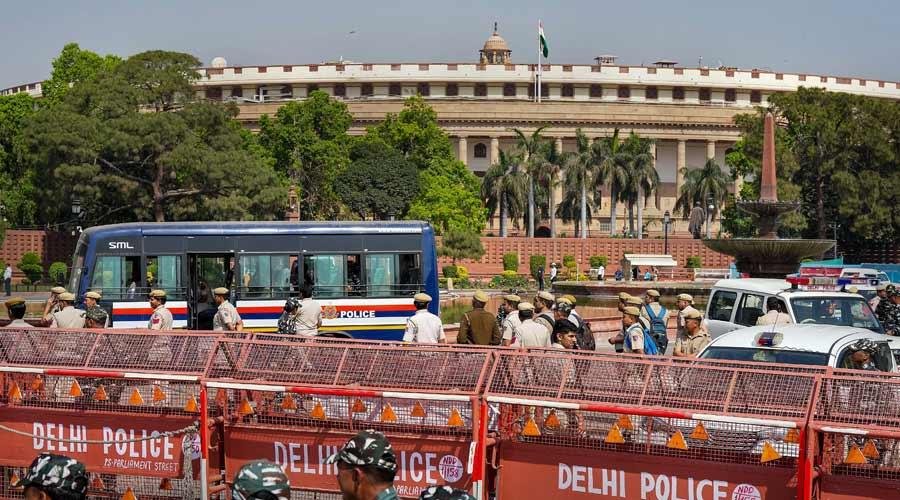
Wangchuk was on the 21st day of his hunger strike when Delhi Police moved him from the protest site to Safdarjung Hospital on Saturday, July 18. His removal was reportedly ordered because of concerns around law and order so close to Parliament, especially with the Cockroach Janta Party’s (CJP) planned march scheduled for the very day Parliament opens.
Doctors at Safdarjung Hospital have said Wangchuk remains conscious and alert, though his body is under stress from prolonged fasting. His potassium levels were reported to have dropped, which doctors called concerning, though an independent test reportedly showed a more normal reading. This difference became a major point of contention between the family and the hospital.
The Legal Battle Over His Treatment
Angmo approached the Delhi High Court, asking that her husband be shifted from the government-run Safdarjung Hospital to a private facility of the family’s choice. She said she had lost trust in the hospital’s handling of the case.
The Court, however, declined to grant the transfer. It accepted the government’s position that keeping Wangchuk at Safdarjung was a medical decision based on his condition, which the Court itself described as serious. The judge noted that Wangchuk could choose to cooperate with doctors, but stopped short of directing him to do so.
Angmo said afterward that the petition had been “wrongly interpreted” and asked why any government intervention couldn’t happen in consultation with the family instead. She insisted her husband was in a stable condition, pointing out that he had already completed a 35-day fast in Ladakh in the past without serious issue.
Massive Turnout at Jantar Mantar
Despite the uncertainty around Wangchuk’s health, the protest site saw an enormous crowd on Sunday. Thousands of people, many of them students, gathered at Jantar Mantar ahead of the CJP’s planned “Chalo Sansad” march to Parliament on Monday.
The scale of the turnout grew even larger after news spread of Wangchuk being taken away by police the day before. Angmo told the crowd that in her husband’s absence, she would personally lead the march and represent him.
Police Say No Permission Given for the March
Delhi Police issued a public clarification stating that no permission had been sought or granted for any march or procession to Parliament. Officials confirmed that Section 163 of the BNSS (the law that replaced the old Section 144 CrPC) is currently active in the New Delhi district, banning gatherings of five or more people without prior approval.
Security has been visibly increased across the area, with extra police personnel, tighter barricading, and stricter vehicle checks at entry points. Delhi Traffic Police also issued an advisory warning commuters of heavy congestion and route restrictions around the Parliament complex, listing several major roads likely to be affected.
Political Reactions Pour In
The situation has drawn reactions from leaders across the political spectrum.
Several opposition figures accused the government of suppressing peaceful protest and avoiding dialogue. Some drew comparisons to past anti-corruption movements, arguing that today’s demonstrators are being treated very differently. Others said the government should simply talk to Wangchuk and address his demands instead of resorting to hospitalisation.
On the other side, some ruling party leaders defended the government’s approach, saying enough action has already been taken against those responsible for the exam paper leak, and questioned whether opposition parties were using Wangchuk’s health struggles to score political points.
Civil society groups and students’ organisations also spoke out, calling the removal of Wangchuk from the protest site an attack on the right to peaceful assembly. Some students elsewhere in the country, including a doctor in Uttar Pradesh, faced disciplinary action simply for publicly expressing support for the movement.
What Happens Next
With Parliament’s Monsoon Session opening Monday and the planned march to the same location on the same day, tensions in the capital are extremely high. The Rajya Sabha has already seen a notice moved to discuss the NEET paper leak issue and Wangchuk’s declining health as a matter of urgency.
For now, all eyes are on whether any political leader takes up Angmo’s offer: a visit to the hospital and a public commitment that education accountability will be debated on the floor of Parliament. If that happens, Wangchuk has indicated he is willing to end his fast. If it doesn’t, the protest, and the standoff, look set to continue.
Conclusion
The Sonam Wangchuk protest has moved well beyond a single issue about one exam paper leak. It has become a larger conversation about accountability in India’s education system, the right to peaceful protest, and how the government responds to activists willing to put their health on the line. With his wife Gitanjali Angmo now leading the charge in his absence, and thousands expected to march toward Parliament, Monday’s Monsoon Session opening could turn out to be a defining moment either way. Whether leaders choose dialogue or continue to hold firm will decide what happens next, both for Wangchuk personally and for the wider movement he has come to represent.
He is protesting alleged irregularities and a paper leak in the NEET-UG exam, demanding the resignation of Union Education Minister Dharmendra Pradhan.
Delhi Police moved him to Safdarjung Hospital on the 21st day of his fast, reportedly due to health concerns and security considerations ahead of Parliament's Monsoon Session and a planned protest march.
His wife, Gitanjali Angmo, said he is willing to end the fast if political leaders visit him and assure that education accountability will be discussed in Parliament's Monsoon Session.
No. Delhi Police has clarified that no permission was granted for any march, and prohibitory orders under Section 163 BNSS are currently in effect in the New Delhi district.
What You Will Master.
- AI Fundamentals & Prompt Engineering
- Automation Tools & No-Code Systems
- AI for Business & Marketing
- Real-World Project Building
- Freelancing & Career Strategy
Apply for Learning
AI Program